
O1
Project Context
The problem?
OVERVIEW
I picked e-waste because the problem is everywhere and the design space is wide open. There is infrastructure to recycle electronics in India. The gap is that people don't use it. Over eight weeks I went from the scale of the problem to a recycler's doorstep, then designed an app that turns a good intention into a booked pickup.

Globally we genrate over 50 million metric tons of e-waste annually. that equivalent to throwing 1000 laptops every second
THE GOALS
Find the real barrier.
Why do working recyclers sit idle while phones pile up in drawers?
Design the easy path.
Make responsible disposal faster than the informal option.
Build a brand students trust.
Give a heavy topic a friendly face for a student audience.
O2
The Solution
What did I build?
My Intent Was To Make Disposal Effortless
Rezy: one app to decide what to do with your old tech.
Rezy turns a vague "I should deal with this someday" into a decision you finish in two minutes. It gives every dead or unused device four things to do, and rewards you for picking one.





Every action earns points and adds to a running impact tally, so the first recycle makes the second one easier.
Making Disposal Simple
This section encourages collective responsibility. The app connects users to verified disposal points and motivates them to take part in community clean-up drives, turning e-waste management into a shared effort.

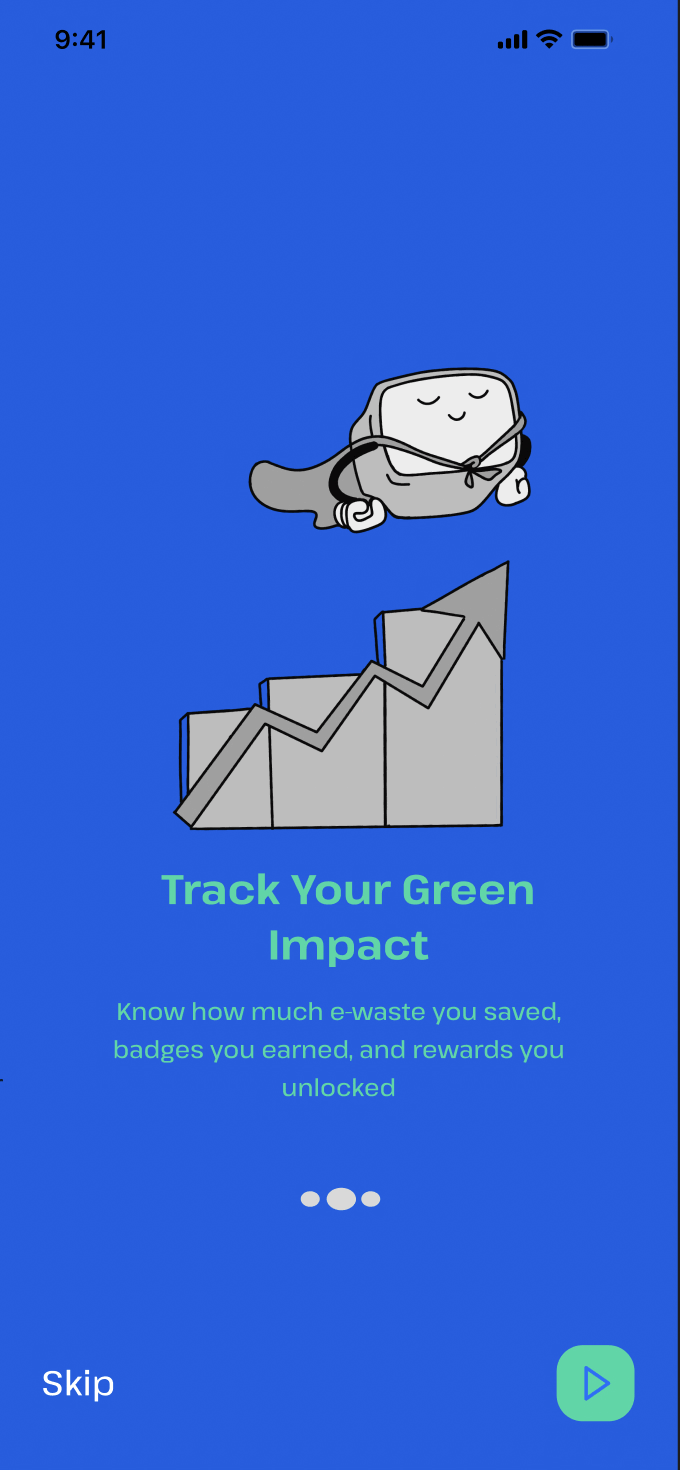
Change You Can Measure
This feature helps users visualize the positive effect of their responsible actions, from the amount of e-waste recycled to the carbon saved, turning abstract change into something tangible and motivating.
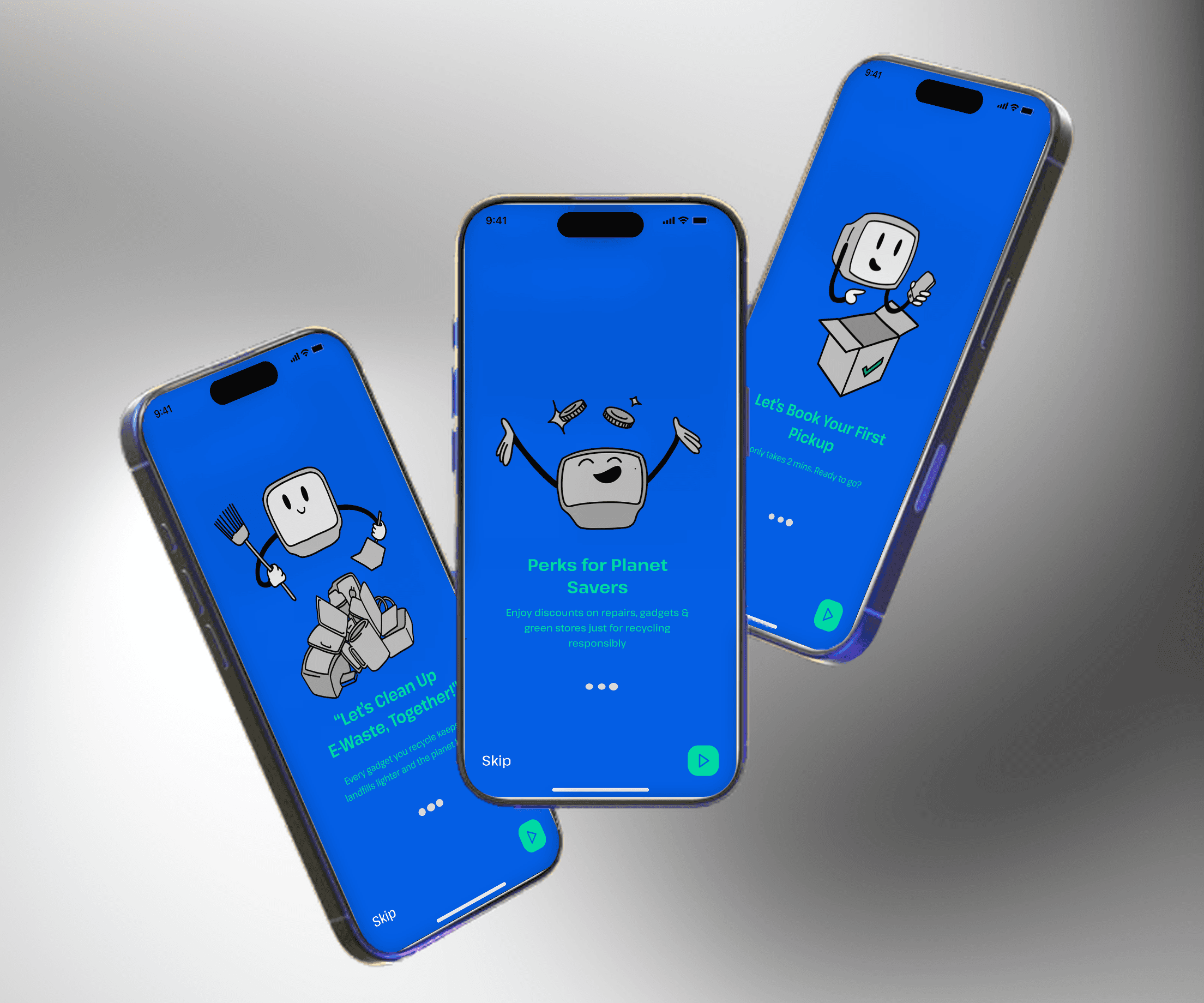
Doing Good Feels Even Better.
Earn rewards every time you recycle. The app partners with brands and collection centers to offer discounts and perks for responsible e-waste disposal.

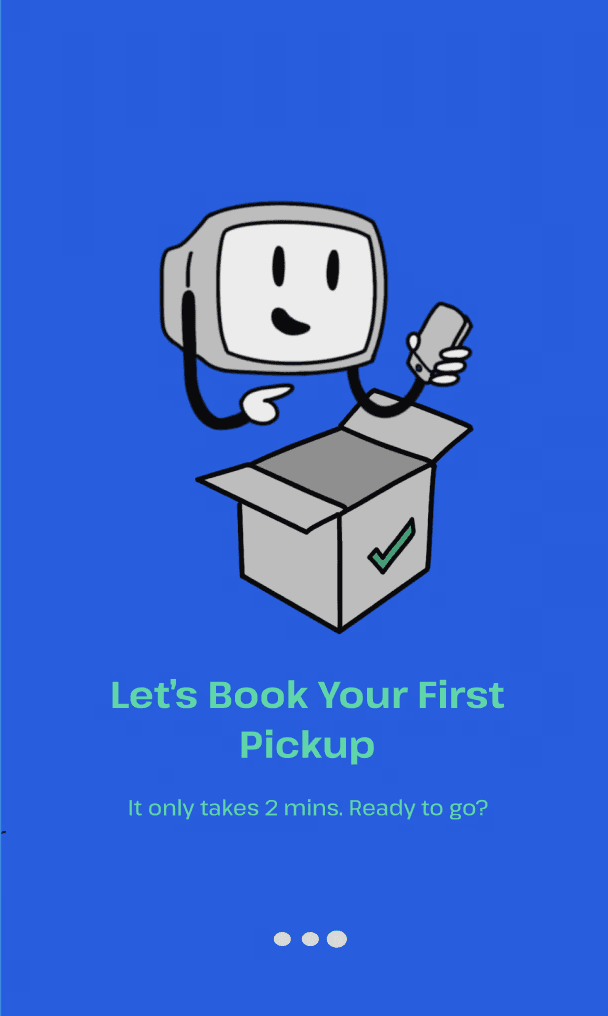
Ready to Start?
Easily schedule your first e-waste pickup through the app. Connect with verified recyclers and make disposal effortless, right from your doorstep.
O3
Key Design Decisions
What did I build?
Campaigns inform. Rezy had to make the action happen.
Plenty of e-waste campaigns already tell people to recycle. They inform, then leave you to figure out the rest. Rezy's job is the part they skip: the action. Four findings from research set the rules for how it works.
Insight 01
People find disposal inconvenient, so intent dies before action.
Decision
Disposal has to take only two minutes,
Why
You book a pickup from home in a few taps and choose a slot. Rezy comes to you, the same way the scrap dealer already does.
Insight 02
People don't know where to recycle, or whether it's safe.
Decision
Only show verified centres, with data security and distance up front.
Why
That answers the two quiet fears behind the drawer: where does my device actually go, and what happens to my data.
Insight 03
Users sit on a spectrum, from fix-it-myself to won't-touch-it.
Decision
One app, three doors: DIY guides, guided help, and find-a-pro.
Why
Prateek repairs his own phone, Ishani wants a guided hand, and Ishana just wants a reliable shop. All three get a path that fits.
Insight 04
Awareness campaigns spike, then fade.
Decision
Build in rewards and a visible impact count.
Why
Points and a running tally give a reason to open the app again next week, so recycling once leads to recycling again.
O4
Insights
Research
I started with headlines and ended at a recycler's doorstep.
I visited Ecolibrium, a recycler in Ahmedabad that can process 600 tonnes a year and receives about 10, because scrap dealers pay more and reach people first. In my survey, 73% of people said they hold on to old gadgets in case they need them later, and don't know where to take them.

Ecolibrium, Ahmedabad. Free collection, a funding squeeze, and prices that scrap dealers beat every time.

Global precedents. Ghana's cradle-to-grave programme, Singapore's reward bins, Fairphone's repairable hardware.

The city's collection setup. Bins and vans exist. What happens after collection is where the trail goes cold.
O4
Impact
From Insights to
Screens
Flows first, then screens.
I mapped the four modes into user flows and a profile system with rewards, sketched the whole app on paper, and pressure-tested it against three personas before moving to high fidelity.


03 · Three personas. Prateek, Ishani, Ishana. Fix-it-myself to won't-touch-it.

01 · User flows. Four modes, plus a profile that keeps score.

02 · Paper wireframes. The full app sketched before a single pixel.
O4
Identity
The Craft
A dull, grim topic needed a friendly face.
The audience is students and young professionals, so the brand had to feel approachable to them. The name went through rounds, ReEcon, ORO, Tesoro, before landing on Rezy: short, easy to say, and built around "recycle". The logo hides an upward arrow for a second life. A little CRT-monitor mascot carries the app, breaks down the repair guides, and does the talking a warning poster can't.

short · easy to say · built around recycle


03 · Three personas. Prateek, Ishani, Ishana. Fix-it-myself to won't-touch-it.
O4
Brand Marketing
For the reach
OFF THE SCREEN
The brand had to work on a wall, not just in the app.
I extended Rezy into posters for colleges and malls near e-waste drop-offs in Ahmedabad. One turns a phone charger into a maze with a QR code at the centre. Another reads "Don't Dump your Ex-phone." Both point back to a two-minute pickup.


Placed in colleges and malls, and near the e-waste disposal units around Ahmedabad.
O4
Reflection
What I learned
What I learned
Design the Decision
The screens were the easy part. Most of the work went into making "deal with my old phone" a task someone finishes in one sitting.
Make convenience the argument.
For this audience the fastest option wins, so the design has to make the responsible choice the easy one.
Let the brand carry the weight.
The retro-desktop world and the mascot did as much to make e-waste approachable as any flow.